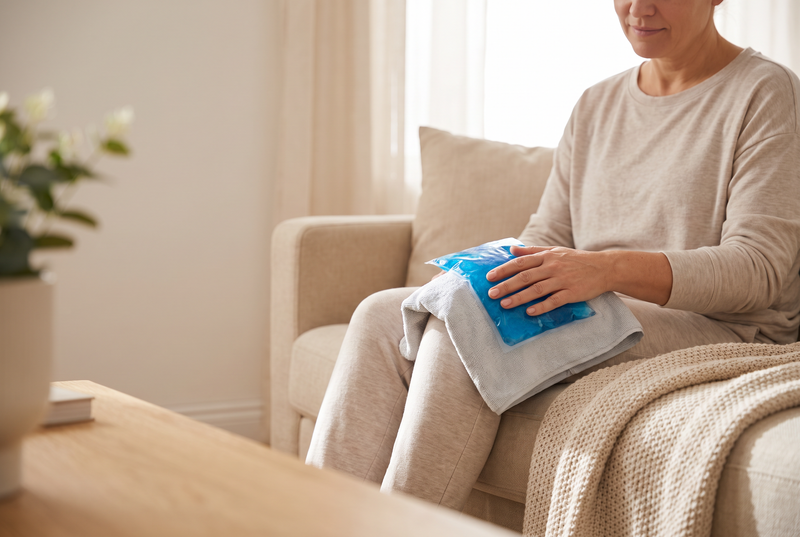
Up to 20 minutes at a time, then give your skin at least a couple of hours to warm back up before the next go. That's the NHS advice for a fresh sprain or strain: an ice pack, or a bag of frozen peas wrapped in a tea towel, for up to 20 minutes every 2 to 3 hours for the first two to three days.
The 20 minutes is a ceiling, not a target. Most ice burns happen because a pack was left on too long, put straight on bare skin, or both. Here's how to get it right, how to spot an ice burn early and what to do if you get one.
How long to leave an ice pack on
NHS hospital leaflets tend to give a range rather than a single number. Bradford Teaching Hospitals tells patients to keep a cold pack on for ten to twenty minutes until the skin turns pink, then wait until the skin is back to its normal temperature before using it again.
So start at the lower end, especially the first time you use a new pack, and look at your skin. Pink means it's done. You don't need to sit it out to the full 20. Some people reach pink in ten minutes, and some packs are colder than others.
It helps to know what the time should feel like. For the first few minutes the cold is sharp, and it can ache. That settles as the skin cools. What it shouldn't do is burn or sting. Bradford's leaflet tells patients to take the pack off straight away if there's any burning sensation, and that's the most useful rule there is. An ice pack can feel uncomfortable. It shouldn't hurt.
Wrapping the pack in a thicker towel doesn't buy you extra time. The towel slows the cold down and protects the surface of the skin, but the tissue underneath is still cooling the whole time. Twenty minutes is still the limit, wrapped or not.
| Question | Short answer |
|---|---|
| How long at a time? | 10 to 20 minutes, stopping when the skin turns pink |
| How long between sessions? | 2 to 3 hours, once the skin is back to normal temperature |
| For how many days? | The first 2 to 3 days after a sprain or strain, says the NHS |
| Straight on the skin? | No. Always put a layer between the pack and your skin |
| Overnight? | No. Never fall asleep with an ice pack on |
How long to wait between ice packs
The NHS says every 2 to 3 hours. The gap matters as much as the 20 minutes, because skin that hasn't fully warmed up starts the next session already cold, and it'll reach the danger point much faster.
A simple check is to touch the area with the back of your hand and compare it with the same spot on your other leg. If it still feels cooler, wait. Icing every hour, or putting a fresh pack straight back on when the first one softens, is how people end up with a burn they didn't see coming.
The NHS advice covers the first two to three days after a sprain or strain. After that, many physios suggest gentle warmth for stiffness rather than more ice, but go by what your physio or pharmacist tells you, particularly if the injury isn't settling. A knee that keeps hurting, locks, gives way or won't take your weight needs looking at, not more ice.
Knees, ankles and backs
The NHS timings are the same for every part of the body, but the body isn't the same all over, and that changes how carefully you need to watch.
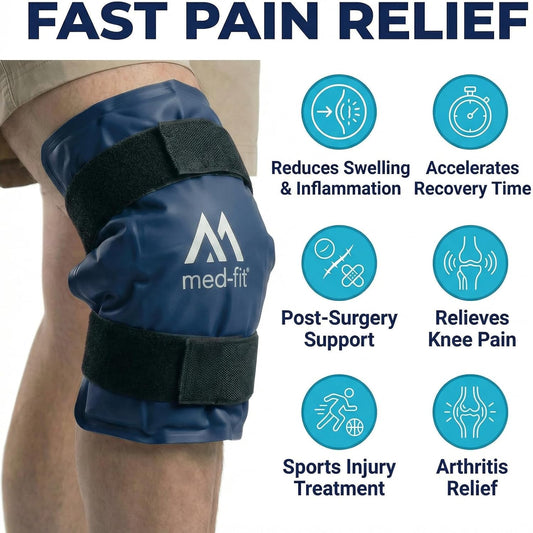
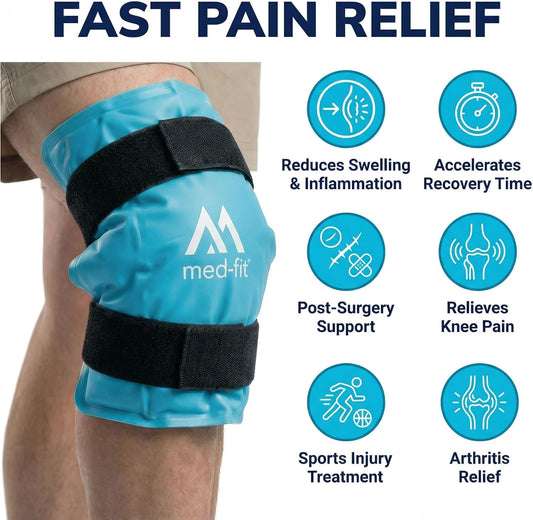
The front of the knee has the kneecap just under the skin and very little padding over it. It cools quickly, so lift the pack and check after five or ten minutes. A pack that wraps around the knee also covers the sides, where there's a little more tissue. Sit or lie with the leg supported so you're not bending the knee against the pack.
The ankle is bony on both sides, and the skin over the ankle bones is thin. Check it early. Raise the foot on a cushion while you ice it, and keep an eye on your toes. If they go pale, tingle or feel numb, take the pack off and loosen anything that's holding it in place.
The lower back has more muscle to cool through, but it brings its own problem. Lying on your back on top of an ice pack presses your whole weight onto it, squeezing the cold into the skin and stopping you seeing what's happening underneath. Lie on your front or your side with the pack resting on your back, or sit with it held against you, so you can lift it and check.
Wherever the pack goes, don't use it over a fresh cut, a graze or a dressing.
Why ice packs burn
An ice pack burn, or ice burn, is cold damage to the skin. It's closer to frostbite than to a burn from heat, but it can blister and scar in the same way.
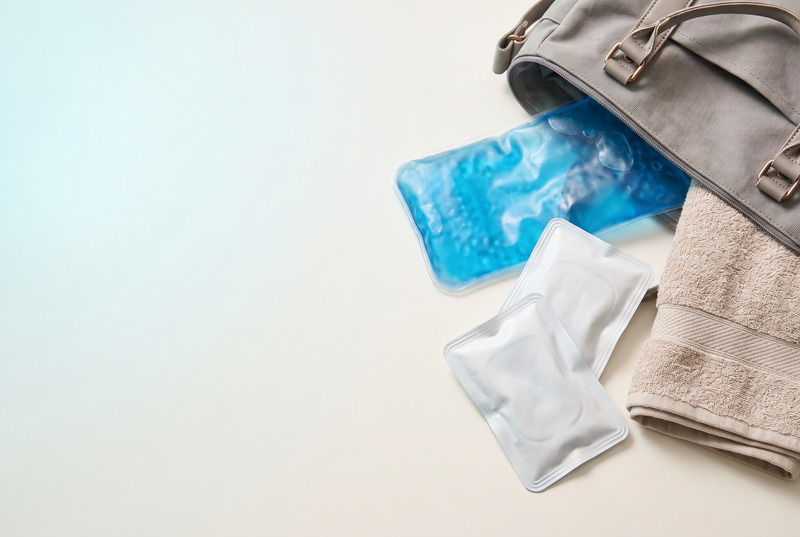
A home freezer runs at around minus 18°C. Melting ice sits at 0°C. That means a gel pack straight from the freezer is a lot colder than a bag of ice cubes, and because the gel stays flexible, it presses close against the skin with no air gaps. Frozen peas fall somewhere in between: they're as cold as the freezer but bumpy, so they don't make the same close contact. Leave any of them on bare skin for long enough and the skin can freeze.
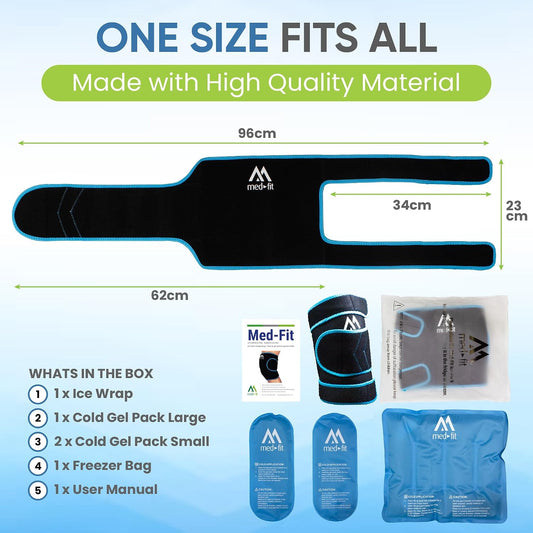
A fabric cover on a pack isn't the same as a layer between the pack and your skin. Covers are thin, and once the pack is strapped on, the gel is only a few millimetres from your skin. Add a tea towel or thin leggings anyway.
The case reports show how easily it happens. One London burns unit described a woman with a partial thickness burn to her calf from an ice pack used at the gym. A US case report describes a 55-year-old footballer who kept ice directly on a calf strain for about four hours. He ended up with a blistered burn 17cm long that took five weeks to heal. The authors put most of these injuries down to prolonged exposure to cold or a thin barrier between the pack and the skin.
How to avoid ice burn
None of this is complicated. It just has to be done every time.
- Put something between the pack and your skin. A thin tea towel, a pillowcase or thin leggings all work. Bradford's leaflet suggests a damp towel. It only needs to be thin. Something as thick as a jumper stops the pack doing much at all.
- Set a timer on your phone. Twenty minutes slips by fast in front of the television, and it's easy to drift off.
- Lift the pack after five or ten minutes and look. Pink is fine. White, grey, blotchy or hard is not.
- Take it off straight away if it starts to burn or sting.
- Don't strap a pack on tighter to make it colder. Tight straps press it closer to the skin and can restrict blood flow further down the leg. Loosen them if your foot or toes tingle, feel cold or look pale.
- Don't sleep with it on, and don't use it on an area that's numb.
- Chill the pack in the fridge instead of the freezer if you want something gentler. It won't get as cold, which makes it a sensible choice for children or anyone with sensitive skin.
Be extra careful with children, older people with thin skin, and anyone who can't easily tell you it's too cold. Use shorter sessions, stay with them, and check their skin yourself rather than relying on them to say.